Seha Pharmacy Platform
Full-Stack Developer34 weeksEn ligneTeam of 4

Seha Pharmacy Platform

Full-stack pharmacy e-commerce migrated from microservices to a modular NestJS monolith

NNestJSTTypeORMMySQLMySQLNext.jsNext.jsTypeScriptTypeScriptASAWS S3JJWT
Voir en ligneCode source

Intelligence projet

Durée

34 weeks

Technologies

7

Statut

Production

Défi principal

Consolidating 7 microservice auth flows into a single modular NestJS auth module with account-type routing

Compétences démontrées

System MigrationHealthcare APITypeORMAWS

En bref

Migrated a pharmacy backend from microservices to a modular NestJS monolith with MySQL, covering auth, products, orders, prescriptions, notifications, and a Next.js storefront.

Problème

Microservices architecture created auth duplication and deployment overhead for a small team

Solution

Modular monolith with shared guards, interceptors, and unified auth module

Résultat

Single deployable API with 10+ modules covering full pharmacy workflow

10+

Backend modules

3

Account types

Résultats clés

10+

Backend modules

3

Account types

v1

API version

Visuels sélectionnés

Order management
1 / 14

Order management

Résultats & impact

Successfully migrated pharmacy platform to a maintainable modular monolith.

Reduced deployment complexity from 7 services to 1 while preserving all features.

10+

Modules consolidated

34

Weeks migration

Architecture

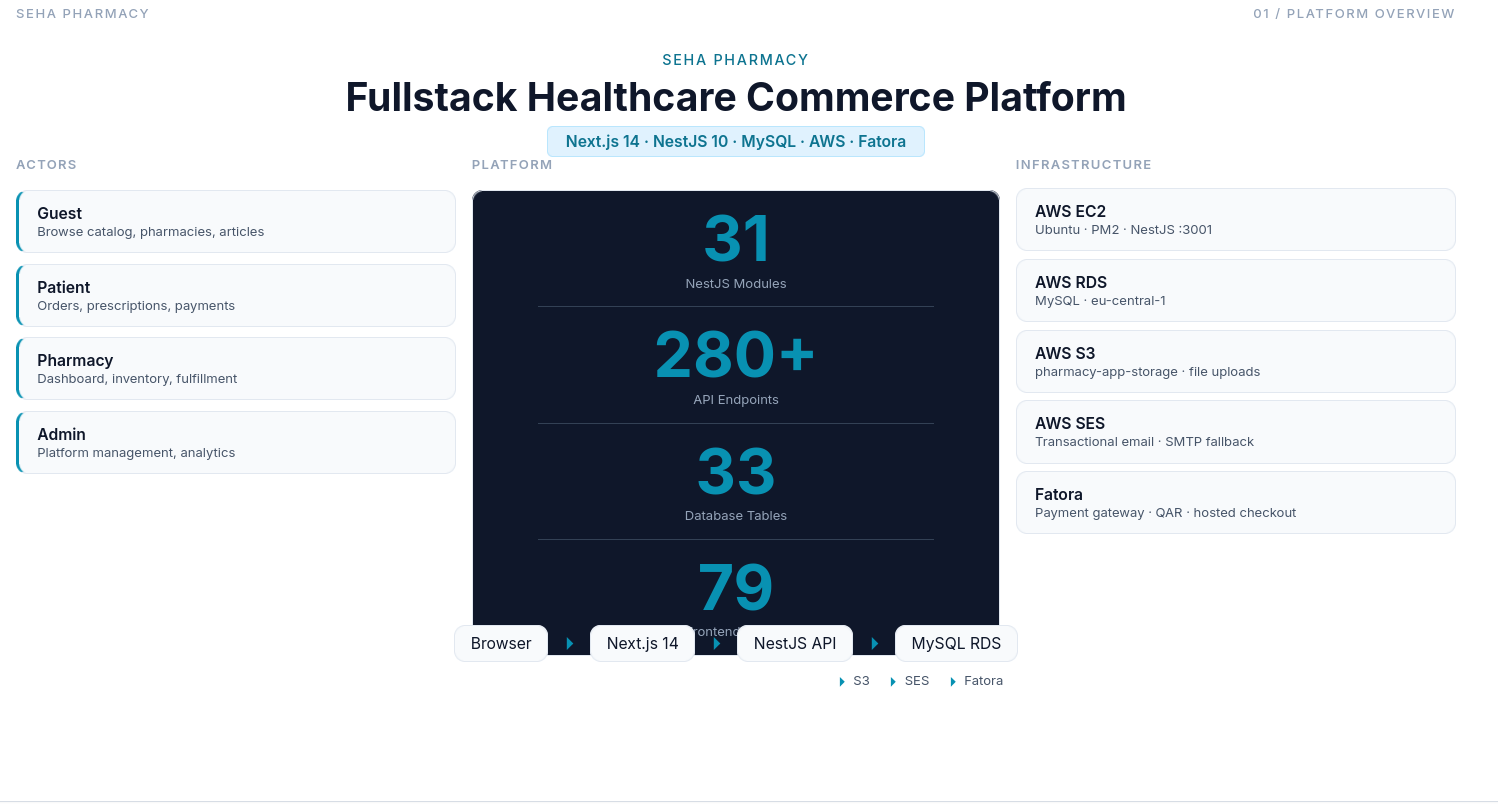
System architecture overview

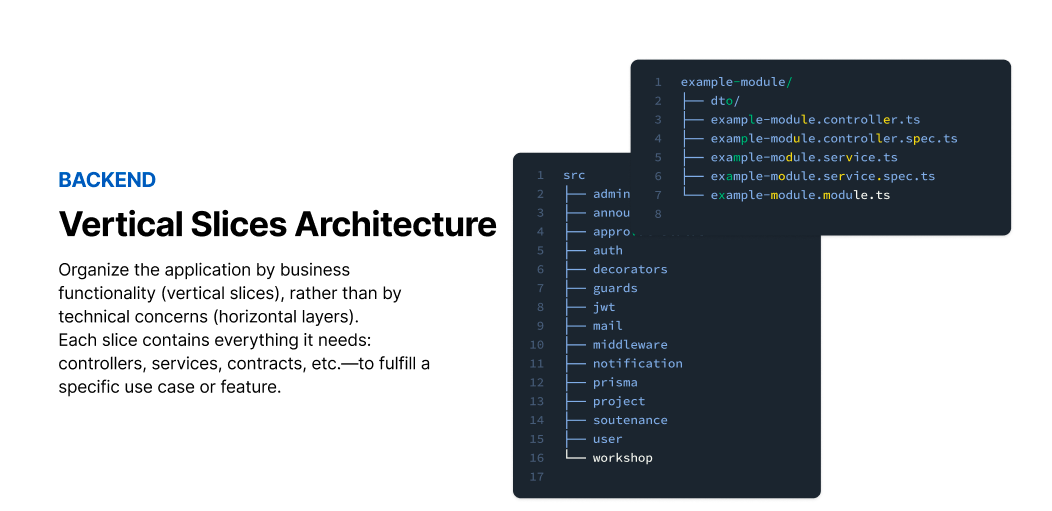
Modular NestJS monolith with domain modules (auth, users, products, orders, prescriptions, pharmacy, location, upload, search, admin, notifications).

Shared common layer provides guards, interceptors, filters, pipes, and decorators. TypeORM entities map to MySQL with migrations.

Next.js frontend communicates via REST API with JWT + refresh token flow.

Infrastructure & déploiement

Backend on cloud VM or container with MySQL 8. AWS S3 for file uploads. Next.js frontend on AWS Amplify or Vercel.

Fonctionnalités

Essentiel

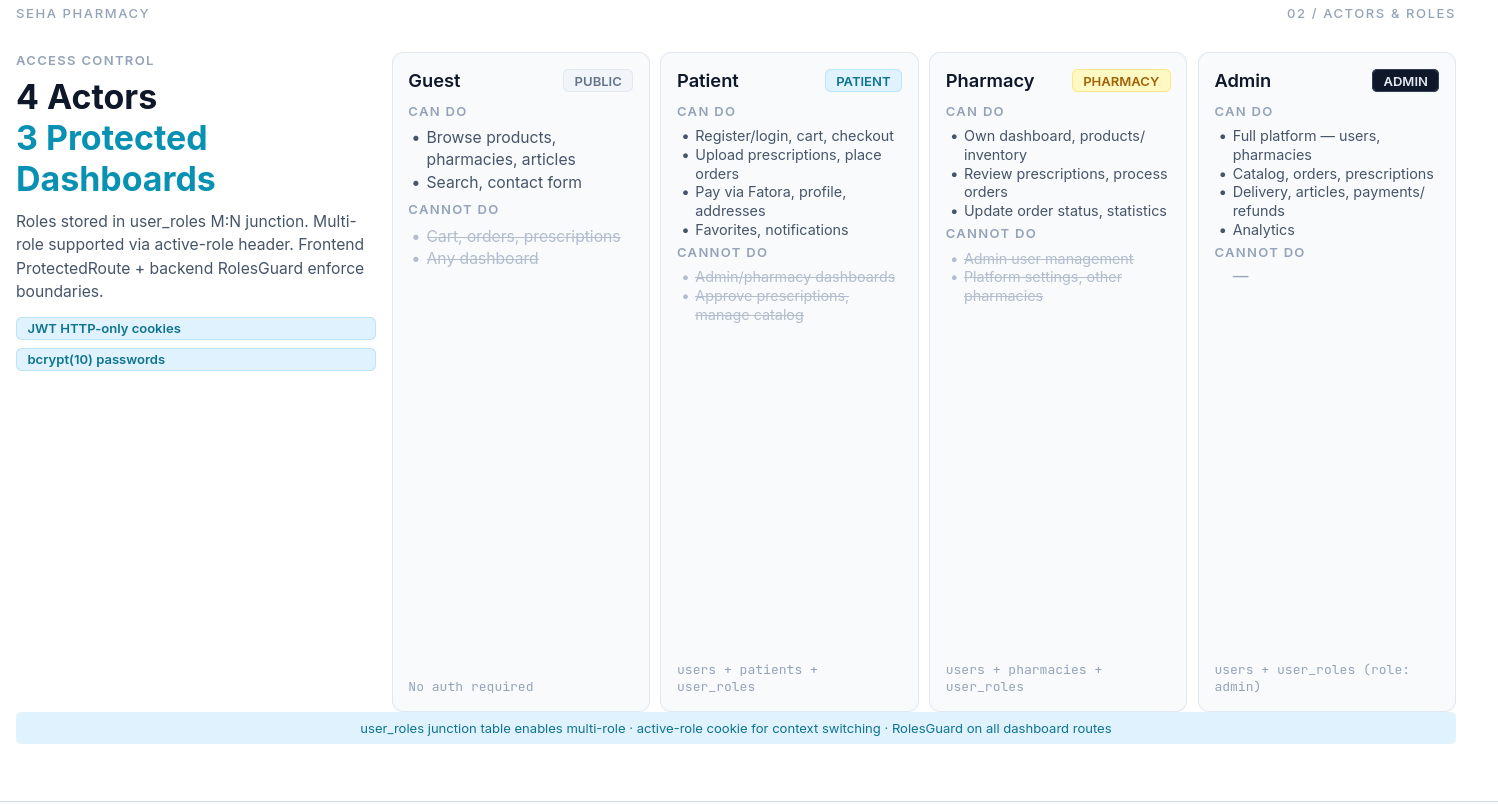
Multi-Role Auth

Patient, pharmacy, and admin authentication with JWT refresh.

Essentiel

Product Catalog

Searchable product listing with filters and categories.

Essentiel

Order Management

Full order lifecycle from cart to fulfillment.

Essentiel

Prescriptions

Upload and manage prescription documents.

Secondaire

Pharmacy Discovery

Location-based search for nearby pharmacies.

Secondaire

Admin Panel

Backend admin operations and analytics.

Défis & solutions

1

Microservice auth consolidation

Le problème

Each microservice had its own JWT validation and user lookup logic.

Comment je l'ai résolu

Single auth module with account-type strategies and shared JwtAuthGuard.

@Post('auth/:accountType/signin')
signin(@Param('accountType') type: AccountType, @Body() dto: SignInDto) {
  return this.authService.signin(type, dto);
}
2

Prescription file handling

Le problème

Prescription uploads needed secure storage with access control.

Comment je l'ai résolu

AWS S3 upload module with signed URLs and pharmacy-only access guards.

const url = await this.s3Service.upload(file, `prescriptions/${userId}/`);
return { url, expiresIn: 3600 };
3

Search across entities

Le problème

Users need to search products, pharmacies, and orders from one endpoint.

Comment je l'ai résolu

Dedicated search module with typed query builders per entity type.

Leçons apprises

  1. 1

    Monolith wins for small teams

    Microservices overhead wasn't justified—modular monolith gave us boundaries without network complexity.

  2. 2

    Account-type routing in auth

    Patient, pharmacy, and admin signin paths share JWT infrastructure but differ in registration and profile schemas.

  3. 3

    Migration needs contract tests

    API contract tests against the old microservices caught breaking changes during consolidation.

Ce que je ferais différemment

Start with monolith architecture and add service extraction only when a module truly needs independent scaling.